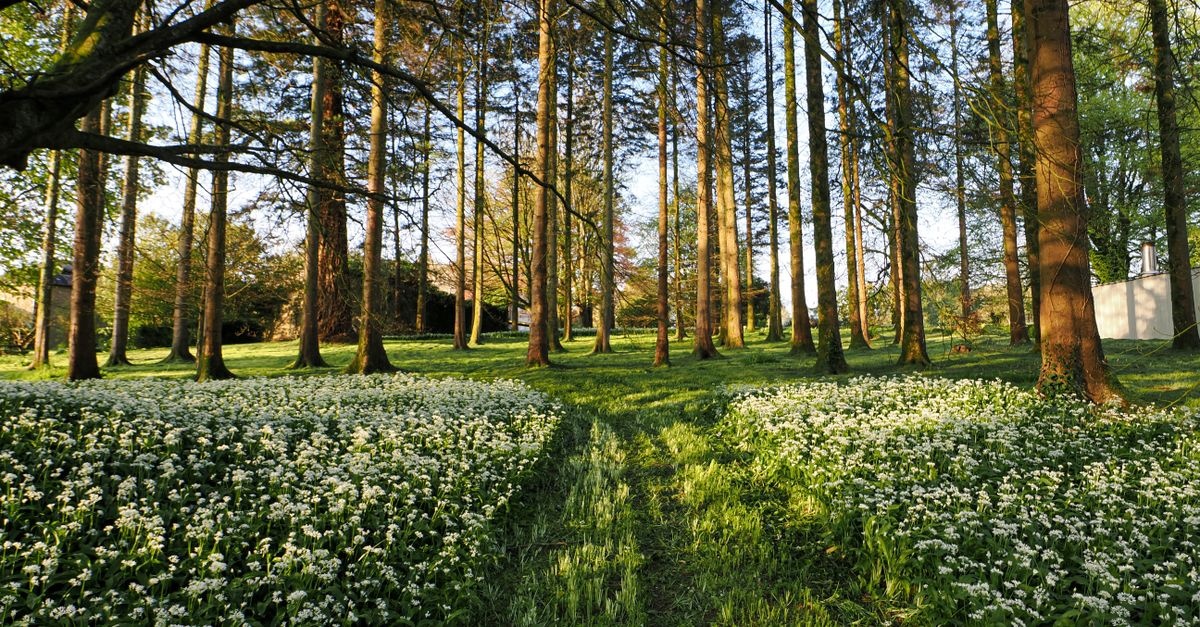
From Shade to Sanctuary: the phrase captures a quiet transformation many gardeners secretly crave. When turf thins and sun-loving borders stall, you are standing on the threshold of a different kind of beauty—one defined by dappled light, leaf litter, mossy edges, spring ephemerals, and the gentle hush of a living forest floor. In the pages that follow, you will find a complete roadmap for bringing that beauty home: site assessment, soil health, layered planting, path-making, water-wise strategies, and seasonal care. Along the way, you will learn how to create a woodland garden with natural undergrowth that looks effortless precisely because it works with nature, not against it.
Why a Woodland Garden Belongs in Your Landscape
Woodland gardens are not simply shady borders; they are immersive, layered ecosystems. A well-designed grove replaces high-input turf with a living tapestry of canopy, understory, shrubs, perennials, and groundcovers. The result is a space that is both visually rich and ecologically generous—cooler in summer, gentler on pollinators, more welcoming to birds and amphibians, and easier to maintain over time.
- Beauty in all seasons: spring ephemerals sparkle before leaves fully emerge; ferns unfurl in summer; berries and bark take center stage in fall and winter.
- Low-input gardening: deep mulch, leaf litter, and dense planting suppress weeds and conserve water.
- Biodiversity boost: native berries, nectar, and shelter bring songbirds, beneficial insects, and small mammals.
- Climate-smart cooling: canopy and understory layers shade soil, reducing evaporation and urban heat.
Core Principles: The Woodland Way
Before the first plant goes in, it helps to think like a forest.
- Layering: stack life vertically—canopy, subcanopy, shrub, herbaceous, and ground layers—so light, water, and nutrients are shared.
- Soil first: forests do not rely on fertilizers; they build soil with leaves, twigs, and wood that decompose slowly and feed mycorrhizae.
- Right plant, right place: select species based on shade, soil texture, moisture, and regional climate.
- Natural undergrowth: a living quilt of ferns, sedges, mosses, and shade-tolerant perennials stabilizes soil, deters weeds, and sustains wildlife.
- Gentle editing: maintenance is light but strategic—mulch annually, weed selectively, and let leaf litter remain.
Site Assessment: Reading Shade, Soil, and Slope
Successful woodland planting begins with careful observation. You are not forcing a garden onto a site; you are partnering with it.
Light Patterns and Dappled Shade
Map the arc of the sun. Under deciduous trees, spring light is stronger before leaves emerge; summer brings mottled shade; autumn opens again. Under conifers, shade is constant and often drier. Observe for a week, noting where and when light pools for 3–4 hours; these become prime spots for flowering perennials and spring bulbs.
- Full shade: less than 3 hours of direct sun; ideal for ferns, mosses, and deep-shade groundcovers.
- Partial/dappled shade: 3–5 hours or filtered light; perfect for spring ephemerals and many woodland perennials.
- Edge light: brighter boundaries offer opportunities for shrubs and woodland-edge species.
Soil Texture, pH, and Organic Matter
Forest soils are typically well-drained, high in organic matter, and buffered by leaf litter. Test pH and observe how water moves after rain. Sandy soils drain fast and may need more mulch; clay holds water and benefits from coarse organic matter. Compaction—common under old lawns—limits root growth and oxygen. Ideally, build soil gently with sheet mulching and time rather than deep tilling.
Moisture and Microclimates
Woodland gardens thrive where water is moderated. Identify downspouts, swales, and low basins. Consider installing a dry stream or rain garden to slow, spread, and sink stormwater. Note cool pockets (north sides of structures), wind tunnels, and frost pockets; match plants accordingly.
Existing Vegetation and Tree Health
Inventory what you have—trees, shrubs, volunteers, invasives. Mature trees are assets; protect their root zones (typically the entire area under the drip line). Avoid heavy excavation or grade changes. When necessary, use air-spading for gentle soil work near roots. Consult an arborist to assess canopy structure and any hazard limbs.
Designing the Layers: From Canopy to Forest Floor
A layered approach creates depth, resilience, and long-term beauty. The undergrowth is the living fabric that binds it all together.
1. Canopy and Subcanopy
Where space allows, select one or two canopy trees to set tone and microclimate. Subcanopy species add seasonal interest and scale transitions.
- Canopy options (temporal zones vary): oak (Quercus spp.), beech (Fagus grandifolia, Fagus sylvatica), hophornbeam (Ostrya), tulip tree (Liriodendron), maple (Acer rubrum, Acer saccharum), birch (Betula).
- Subcanopy/small trees: serviceberry (Amelanchier), dogwood (Cornus florida, Cornus kousa), redbud (Cercis), hornbeam (Carpinus), Japanese maple (Acer palmatum in suitable regions).
Tip: Choose regionally native trees whenever possible; they host more local invertebrates and feed more birds.
2. Shrub Layer
Shrubs supply structure, flowers, berries, and cover for wildlife. They also create garden rooms and pathways.
- Flower and fruit: viburnum (Viburnum dentatum, V. trilobum), winterberry (Ilex verticillata), ninebark (Physocarpus opulifolius), spicebush (Lindera benzoin), hazel (Corylus avellana, C. americana), witch hazel (Hamamelis spp.).
- Evergreen texture: yew (Taxus, where safe), inkberry holly (Ilex glabra), rhododendron and mountain laurel (rhododendron/kalmiowe in acidic soils).
3. Herbaceous Layer
Here is the beating heart of the display. Aim for rhythmic drifts of shade-tolerant perennials that ebb and flow with the seasons.
- Spring ephemerals: trillium, bloodroot (Sanguinaria), Dutchman’s breeches (Dicentra cucullaria), Virginia bluebells (Mertensia), wood anemone (Anemone nemorosa), wild ginger (Asarum).
- Summer anchors: hosta (where slug pressure is manageable), Solomon’s seal (Polygonatum), goatsbeard (Aruncus), foamflower (Tiarella), astrantia, meadow rue (Thalictrum), heuchera, barrenwort (Epimedium).
- Autumn interest: Japanese anemone (Anemone hupehensis), bugbane (Actaea/Cimicifuga), turtlehead (Chelone), monkshood (Aconitum; handle with care).
4. Ground Layer and Natural Undergrowth
This layer is crucial. True woodland undergrowth is a mosaic: ferns, sedges, creeping natives, moss, leaf litter, fallen twigs, and the quiet work of fungi. Density is your weed control; diversity is your insurance.
- Ferns: lady fern (Athyrium), Christmas fern (Polystichum acrostichoides), ostrich fern (Matteuccia struthiopteris), Japanese painted fern (Athyrium niponicum).
- Sedges and grasses: Pennsylvania sedge (Carex pensylvanica), palm sedge (Carex muskingumensis), woodrush (Luzula sylvatica), Hakone grass (Hakonechloa) for brighter edges.
- Groundcovers: wild strawberry (Fragaria virginiana), barren strawberry (Waldsteinia), sweet woodruff (Galium odoratum), golden ragwort (Packera aurea), pachysandra terminalis alternatives like Pachysandra procumbens (native in parts of the U.S.).
- Moss and leaf litter: allow moss to colonize moist, compacted, or rocky spots; preserve leaves as free mulch and wildlife habitat.
When gardeners ask how to create a woodland garden with natural undergrowth, the answer often begins here: pick 5–7 reliable ground-huggers, plant them densely, and let them knit into a soft, living carpet.
Soil Health: Feeding the Forest Food Web
Healthy woodland soils are like slow cookers. They simmer with decomposers—fungi, bacteria, beetles—that convert wood and leaves into a steady nutrient supply. Mimic that cycle.
Sheet Mulching to Reset the Floor
To convert lawn to woodland without heavy tillage, use sheet mulching:
- Mow low and leave clippings in place.
- Layer plain cardboard (overlapped like shingles) to smother grass and many weeds.
- Add 7–10 cm of coarse, woody mulch or shredded leaves.
- Water thoroughly and let rest 6–12 weeks before planting, or plant immediately by cutting X-shaped slits.
What to avoid: landscape fabric under mulch; it restricts soil life and root exchange.
Mulch, Leaf Litter, and Mycorrhizae
Refresh with shredded leaves and micro-chipped wood each fall. Keep mulch a hand’s width away from trunks and crowns. Over time, fungal networks form, improving drought resilience, disease resistance, and nutrient sharing among plants. That is the quiet engine beneath your undergrowth.
Plant Palette by Region
Use regionally native species where possible, blending with well-behaved exotics for texture and bloom.
Temperate North America
- Trees: red maple (Acer rubrum), serviceberry (Amelanchier), eastern redbud (Cercis canadensis), river birch (Betula nigra), white oak (Quercus alba).
- Shrubs: spicebush (Lindera benzoin), arrowwood viburnum (Viburnum dentatum), witch hazel (Hamamelis virginiana), inkberry (Ilex glabra), mapleleaf viburnum (Viburnum acerifolium).
- Herbaceous/undergrowth: Christmas fern (Polystichum acrostichoides), foamflower (Tiarella cordifolia), wild geranium (Geranium maculatum), woodland phlox (Phlox divaricata), golden ragwort (Packera aurea), sedges (Carex spp.).
UK and Northern Europe
- Trees: silver birch (Betula pendula), rowan (Sorbus aucuparia), hazel (Corylus avellana), field maple (Acer campestre), hornbeam (Carpinus betulus).
- Shrubs: guelder rose (Viburnum opulus), dogwood (Cornus sanguinea), holly (Ilex aquifolium), spindle (Euonymus europaeus).
- Herbaceous/undergrowth: wood anemone (Anemone nemorosa), primrose (Primula vulgaris), dog’s mercury (Mercurialis perennis), hart’s-tongue fern (Asplenium scolopendrium), sweet woodruff (Galium odoratum), bluebells (Hyacinthoides non-scripta where native).
Pacific Northwest (Mild, Moist)
- Trees: vine maple (Acer circinatum), Douglas-fir (Pseudotsuga menziesii), western redcedar (Thuja plicata), bigleaf maple (Acer macrophyllum).
- Shrubs: salal (Gaultheria shallon), evergreen huckleberry (Vaccinium ovatum), red-flowering currant (Ribes sanguineum).
- Undergrowth: sword fern (Polystichum munitum), vanilla leaf (Achlys triphylla), oxalis (Oxalis oregana), foamflower (Tiarella trifoliata).
Warmer and Drier Climates
Lean into drought-tolerant woodland analogs and deep mulch. Use oaks, arbutus, madrone, manzanita, and dry-shade stalwarts like lomandra, liriope, and shade-tolerant salvias under high canopies. Irrigate deeply but infrequently to encourage deep rooting.
Master Plan: Step-by-Step to a Woodland Garden
Step 1: Clarify Purpose and Scale
Is the goal a quiet reading grove, a wildlife corridor, a front-yard transformation, or all three? Sketch broad zones: arrival, meander path, seating, focal tree, understory drifts, and a moist hollow if possible.
Step 2: Protect and Prepare the Soil
Mark tree root zones and keep heavy traffic to a minimum. Sheet mulch large areas; hand-weed tough perennials and invasive rhizomes. Add logs or stumps as micro-habitats and natural edging.
Step 3: Place the Big Bones
Site canopy/subcanopy trees first, then anchor shrubs at path bends, corners, and edges. Think in threes and fives for repetition. Ensure views open and close as you walk.
Step 4: Compose the Undergrowth
Choose a palette with contrasting leaf shapes, textures, and heights. Combine ferns with sedges and spreading groundcovers. Interweave spring bulbs in pockets where light is stronger early in the season. This is the moment many gardeners truly learn how to create a woodland garden with natural undergrowth: by designing the floor first, then sprinkling taller accents for rhythm.
Step 5: Add Paths, Seating, and Subtle Structure
- Paths: 60–90 cm wide, gently curving; surfaces of leaf mold, fine gravel, or wood chips blend beautifully and drain well.
- Seating: a simple bench on a compacted gravel pad; consider log rounds for rustic perches.
- Focal points: a mossy boulder, a birdbath, a fallen log bridge across a dry stream—small gestures feel big in the woods.
Step 6: Water and Establish
Water deeply after planting and weekly for the first growing season, then taper. Mulch annually every fall. Avoid overhead irrigation on shade perennials prone to foliar disease; use soaker hoses if needed.
Planting the Forest Floor: Undergrowth Combinations
Build resilient, weed-suppressing tapestries with layered ground-huggers and low perennials. Repeat combinations in irregular drifts for a natural effect.
Cool, Moist Pockets
- Base layer: moss patches, wood sorrel (Oxalis), sweet woodruff.
- Texture: lady fern + hart’s-tongue fern for contrast.
- Seasonal sparks: trillium and snowdrops (Galanthus) for early spring; Japanese anemone for fall.
Dry Shade Under Deciduous Trees
- Base layer: Pennsylvania sedge + barren strawberry (Waldsteinia).
- Texture: epimedium (ever-reliable), hellebores near path edges.
- Accent: Solomon’s seal arcing through like green calligraphy.
Woodland Edge (Brighter)
- Base layer: woodland phlox and golden ragwort for spring color and summer cover.
- Texture: hakone grass at sunlight flecks; astrantia for pollinators.
- Accent: serviceberry underplanted with foamflower.
Water, Drainage, and the Rain Garden Option
Forests are master hydrologists. Emulate their sponges.
- Dry stream: a shallow, meandering swale lined with stones to channel roof runoff into planting beds.
- Rain garden: a depressed bed filled with fibrous-rooted natives (e.g., sedges, joe-pye weed at edges where bright) to capture storm surges.
- Mulch memory: shredded leaves and ramial wood chips soak and slow water.
These strategies safeguard your undergrowth by reducing erosion and supplying steady moisture without prolonged saturation.
Paths, Edges, and Subtle Structures
Woodland gardens reward slow walking. Design paths that invite exploration and make maintenance easy.
- Materials: leaf mold or fine gravel feel soft underfoot and look natural.
- Edges: living edges of sedge or pachysandra (native where applicable) are more organic than rigid metal; low logs or stacked branches also work.
- Thresholds: simple stepping stones or a small gate signal passage into a quieter world.
Wildlife Habitat: Make the Garden Alive
Every element can do double duty as habitat.
- Leaf litter: leave it. It shelters caterpillars, beetles, and overwintering pollinators.
- Logs and brush: arrange a tidy brush pile in a back corner; tuck a hollow log near a damp spot for salamanders and toads.
- Water: a shallow basin with stones becomes a bird spa and pollinator sip station.
- Dense thickets: viburnum, dogwood, and hazel offer berries, nesting, and cover.
When you lean into habitat, you accelerate the self-sustaining cycles that keep undergrowth healthy and vibrant.
Maintenance: Light, Rhythmic, and Ecological
A woodland garden thrives on gentle, regular attention rather than hard resets.
Seasonal Rhythm
- Late winter: cut back epimedium foliage before new blooms; edit seedheads if they threaten to oversow; prune shrubs lightly for structure.
- Spring: weed once early while soil is soft; plant spring ephemerals in open pockets before canopy leaf-out.
- Summer: water deeply during droughts; spot-weed; cut back spent stems selectively to cue fresh growth.
- Autumn: top up with shredded leaves; leave most standing stems and seedheads for winter habitat; clear only what blocks paths.
Weed and Invasive Control
Prevention beats cure. Dense planting plus leaf mulch suppresses most annual weeds. For perennials with rhizomes, hand-dig early and persistently. Avoid bare soil; replant gaps quickly. Research region-specific invasives and remove them before they set seed.
Pests, Deer, and Slugs
- Deer: favor resistant species (ferns, epimedium, hellebores, hakone grass) and protect young plants with cages the first year.
- Slugs/snails: switch to tougher foliage (epimedium, tiarella) near vulnerable hostas; use beer traps or iron phosphate baits when necessary; water in mornings so surfaces dry by night.
- Rodents: plant bulbs like narcissus and alliums less favored by voles; use hardware cloth baskets if needed.
Composing for Four Seasons
Woodland beauty shifts quietly. Design with that in mind.
- Spring: carpets of phlox and bluebells, punctuated by trillium and bleeding heart, before canopy leaf-out.
- Summer: broad fern fronds, the arch of Solomon’s seal, and soft drifts of tiarella and astilbe.
- Autumn: viburnum berries, spicebush yellow, woodland asters, and the glow of hakone grass on the edge.
- Winter: evergreen ferns, hellebores, bark of birch or dogwood stems, and the sculptural silhouettes of seedheads.
Sample 10 × 15 Meter Plan
Scale this layout up or down, keeping relationships intact.
- Canopy: one serviceberry offset left; one small maple anchoring the far right corner.
- Shrubs: three viburnums staggered along the back fence; a pair of witch hazels to frame the seating nook.
- Path: a meandering 80 cm path loops from gate to bench; a stepping-stone spur to a small birdbath.
- Undergrowth drifts: 6 m² of Pennsylvania sedge weaving through, studded with clumps of epimedium, foamflower, and Christmas fern; golden ragwort fills sun-flecked edges.
- Feature: a dry stream captures a downspout, crossing under a simple log bridge.
This composition shows one way of how to create a woodland garden with natural undergrowth while balancing movement, rest, and habitat.
Budget, Tools, and Smart Shortcuts
- Start with small plants: quart-sized perennials and bareroot shrubs establish faster than oversized specimens and cost far less.
- Divide and repeat: many woodlanders (epimedium, tiarella, sedges) divide well after a year or two, expanding your carpet cheaply.
- Mulch locally: arborist wood chips and autumn leaves are often free; mix and layer for texture.
- Essential tools: spade, hori-hori or hand weeder, pruning saw, bypass pruners, wheelbarrow, and a flexible soaker hose.
Common Mistakes to Avoid
- Overcleaning: removing all leaves and stems robs the soil and wildlife.
- Flat palettes: relying on one or two groundcovers invites pests and looks monotonous.
- Ignoring light shifts: planting bloomers that need early spring light under heavy evergreens sets them up to fail.
- Too much irrigation: woodland roots resent sodden soil; water deeply but infrequently.
- Planting into compacted ground: reset with sheet mulch first; your undergrowth will thank you.
FAQ: Practical Answers
How long until it looks established?
With dense planting and fall mulching, a woodland floor begins to read as intentional within one season. Full cohesion often arrives in 2–3 years as plants knit and leaf litter accumulates.
Do I need fertilizer?
Generally no. Healthy woodland gardens run on organic inputs: leaves, woody mulch, and occasional compost. If a soil test shows severe deficiencies, correct gently.
Can I mix natives and exotics?
Yes—prioritize regionally native workhorses for habitat and resilience, then add well-behaved exotics for texture and bloom, avoiding invasive lookalikes.
What if I have tree roots everywhere?
Plant small and wide. Use plugs, quart-size perennials, and a narrow trowel. Soak planting holes and water deeply after. Avoid cutting major roots.
Is a woodland garden messy?
It is intentionally soft. Define paths and edges crisply; beyond them, let nature’s textures shine. That contrast reads as purposeful, not messy.
A Quick-Start Checklist
- Observe light, soil, and water for one week.
- Sheet mulch the area; add logs and leaf litter.
- Place canopy/subcanopy anchors, then shrubs.
- Design the floor first: 5–7 ground-huggers plus ferns and sedges.
- Lay paths, a bench, and a small water feature.
- Plant densely; water deeply the first season.
- Mulch with shredded leaves each fall; weed lightly in spring.
Bringing It All Together
In the end, learning how to create a woodland garden with natural undergrowth is as much about restraint as action. You gather the right players, prepare the stage, and then step back so the ecology can take the lead. Layer by layer, a sanctuary emerges—cool, quiet, and alive. The forest floor hums with mycorrhizae, leaf litter softens footsteps, and spring ephemerals flash before the canopy returns. Birds thread through viburnum thickets; a toad tucks beneath a damp log. In a world of hurry, your woodland whispers a different tempo. Plant it once with care, tend it lightly, and let the shade become your sanctuary.
Further Steps and Inspiration
- Keep a phenology journal: note first bloom, leaf-out, and migrations; adjust plantings for extended seasonal interest.
- Trade plants with neighbors: divide and share woodland stalwarts to expand diversity cheaply.
- Visit public gardens: study path widths, plant groupings, and how they manage edges and leaf litter.
Whether you are stewarding an existing grove or starting from lawn, you now have a clear path for how to create a woodland garden with natural undergrowth that feels timeless and thrives with minimal fuss. Welcome to the woods.