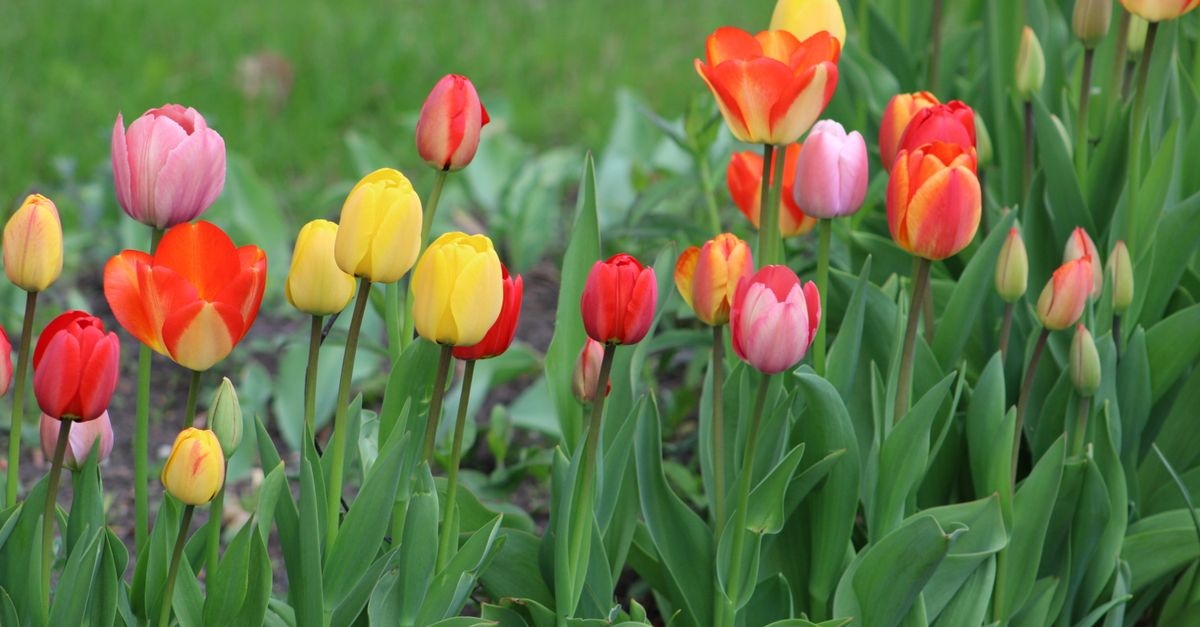
There is a moment in May when gardens feel like a chorus, and tulips carry the melody. Their cups catch sunlight, their stems punctuate curves, and their colors paint borders as if a quick hand had swept across the landscape. If you are planning this spring’s display or fine-tuning one that is already emerging, this guide offers a complete toolkit of design principles, plant partners, color strategies, and maintenance know-how. You will find May garden arrangements with tulips–ideas for patios, borders, meadows, and cutting gardens that balance style with sustainability and long-term success.
Why May Belongs to Tulips
May is prime time for tulips in many temperate regions: the air is warming, pollinators are active, and light quality can still be crisp and flattering. By now, early and mid-season tulips overlap with late bloomers, giving you the richest possible palette. When paired thoughtfully with perennials, shrubs, groundcovers, and textural foliage, tulips do more than decorate—they structure space, guide sightlines, and set the emotional tone of the garden.
Know Your Tulip Classes for Timing and Texture
The best arrangements begin with understanding bloom windows and flower forms. Mix classes to extend display and create visual rhythm.
- Early bloomers: Single Early, Double Early, Kaufmanniana, Greigii, and Fosteriana. Compact forms, often ideal for the front of borders and containers.
- Mid-season: Triumph and Darwin Hybrid tulips offer sturdy stems and saturated color, strong for breezy May days.
- Late season: Single Late, Lily-flowered, Fringed, Viridiflora, Parrot, and peony-flowered doubles. These bring drama, height, and memorable silhouettes.
Blend heights and shapes—sleek Lily-flowered with round peony doubles, or tidy Triumphs with frilly Parrots—to keep the eye engaged without visual noise.
Color Theory You Can Use in the Garden
Color is your most persuasive design tool. Use it to steer emotion and unify space.
- Monochrome elegance: One hue in multiple tones (for example, a suite of soft pinks) yields calm sophistication.
- Complementary spark: Opposites on the color wheel—purple and yellow, red and green—create high contrast that reads across distance.
- Analogous harmony: Neighboring hues (orange-red-pink) blend seamlessly, supporting a luminous, painterly effect.
- Warm vs. cool: Warm colors (red, orange, yellow) advance and energize; cool colors (blue, violet, white) recede and soothe.
- Saturation control: Pair bold, saturated tulips with subtle foliage or pale partners to avoid visual overload.
Design Principles for Dazzling Ground Arrangements
Great tulip compositions look intentional from multiple angles and in different lights. Use these principles to compose borders and beds that feel alive and coherent.
Layered Heights and Textures
Think in strata, just as a painter builds depth.
- Front: Dwarf tulips, creeping groundcovers, or low perennials (Heuchera, Iberis, or creeping thyme) to define edges.
- Middle: Triumphs, Darwin Hybrids, peony-flowered doubles for mid-height color blocks.
- Back: Lily-flowered, Single Late, or Parrot tulips for height, mixed with airy companions like ornamental grasses or late-spring perennials.
Vary leaf texture so bold tulip leaves meet finer foliage (brunnera, ferns, or sedges), creating a patterned backdrop that makes flowers pop.
Repetition and Rhythm
Scatter single colors and the eye can feel lost. Repeat color notes or flower forms at intervals to guide movement.
- Trios: Plant in repeating triangles of 5–7 bulbs per point for dynamic clusters that look natural yet organized.
- Echoes: Mirror a color from a front path pot in a mid-border drift for cohesion across the space.
- Pacing: Alternate saturated and pale groups to create breathing room.
Focal Points and Sightlines
Place your boldest tulips where they can be seen from common viewpoints—kitchen window, patio chair, gate. Use larger doubles or Parrots as visual anchors, then feather out into simpler forms so the eye has a place to rest before moving on.
Companion Planting That Elevates Tulips
Companions are not just for looks—they hide spent foliage, invite pollinators, and stabilize soil moisture. Smart pairings turn a short tulip season into an all-spring performance.
Early Spring Carpets
- Creeping phlox (Phlox subulata): A living pastel rug; lets tulip stems spike through like candles on a cake.
- Candytuft (Iberis sempervirens): Glossy leaves and white clusters amplify saturated tulip tones.
- Ajuga and thyme: Dark-toned or aromatic mats that contrast tulip foliage and reduce weeds.
Mid- to Late-Spring Partners
- Forget-me-nots (Myosotis): Blue haze that flatters reds, pinks, and oranges, straight from the Dutch painter’s playbook.
- Alliums: Spherical blooms bridge the gap after tulips, extending structure and color into early summer.
- Wallflowers (Erysimum): Long bloomers in jewel tones; scent plus color equals curb-appeal magic.
- Brunnera and pulmonaria: Speckled or silvered leaves cool down intense tulip palettes.
- Euphorbia: Acid-green bracts electrify purples, magentas, and deep reds.
Foliage Foils and Wildlife Savvy
- Fern fronds and sedges: Lacy movement that frames the upright tulip line.
- Hosta: Emerging leaves form sculptural bowls that catch shadows and guide the eye between tulip clusters.
- Deer-resistant buffers: Thread daffodils, alliums, and fritillarias among tulips to deter browsing and protect your display.
May Containers: Portable Tulip Theater
Containers concentrate color at eye level and deliver a high-style effect even in small spaces. They are perfect for front doors, patios, balconies, and stair landings.
Pot and Soil Basics
- Drainage first: Choose pots with ample holes; elevate with pottery feet. Tulips detest waterlogged roots.
- Soil mix: Use a high-quality, peat-free potting medium blended with 10–20% sharp grit or perlite for aeration.
- Fertilizer: Slow-release, balanced, low-nitrogen feed incorporated at planting supports steady growth.
Lasagna Planting for Extended Display
Layer bulbs in tiers to stage a month-long show. Bottom layer: late tulips; middle: mid-season Triumphs or Darwin Hybrids; top: early blooming species or miniature tulips. Finish with a thin layer of winter pansies, violas, or spring annuals to mask soil until buds rise.
Container Color Stories
- Moonlit cool: White Single Lates with pale pink doubles and silver helichrysum spilling over the rim.
- Sunlit citrus: Orange Triumphs with lemon-yellow fringed tulips and chartreuse heuchera.
- Painterly jewel: Magenta Parrots with plum heuchera and violet violas for smoldering depth.
Maintenance on the Move
- Water evenly: Keep soil moist, not soggy; check daily during warm spells.
- Rotate pots: Quarter-turn weekly for balanced growth and even color on all sides.
- After bloom: Deadhead and let foliage yellow naturally before composting annuals or setting the container aside to rest.
Pathways, Borders, and Beds: Signature Arrangement Ideas
Use tulips to compose scenes that tell a story as you move through the garden. Below are field-tested ideas that adapt well to different spaces and styles.
The Dutch Painter Border
Pair streaked or flamed tulips with a blue groundcover to create irresistible contrast and a timeless feel.
- Tulips: Rembrandt-style or Viridiflora streaked forms in crimson, cream, and green.
- Blue base: A sea of Myosotis or Brunnera for the painterly haze.
- Structure: Upright alliums to bridge into June and keep height in the composition.
Orchard Meadow Drift
If you garden under light tree canopies or have a small lawn, plant naturalizing species tulips in drifts among spring bulbs and grasses.
- Species mix: Tulipa clusiana, T. tarda, and T. bakeri for reliable returns.
- Support: Spring bulbs like muscari and miniature daffodils. Low grasses add movement and reduce mowing.
- Look: Airy, informal, and irresistibly photogenic in morning light.
Front-Door Wow
Symmetry is your friend at entrances. Use a pair of urns with tiered tulip plantings flanked by evergreen topiary or clipped boxwood.
- Palette: Choose one bold hue and one soft neutral for versatility with seasonal decor.
- Texture: Add ivy, trailing lysimachia, or bacopa to soften pot edges.
Cutting-Garden Rows
Design a utilitarian but beautiful bed where tulips are grown for the vase. Stagger rows so you can harvest without leaving gaps in the display visible from the path.
- Row spacing: 6–8 inches between bulbs, 10–12 inches between rows.
- Succession: Early, mid, and late groups in separate bands for clear scheduling.
- Vase-ready partners: Alliums, iceland poppies, and anemones elongate the cutting season.
Sustainable and Climate-Smart Tulip Gardening
Beauty lasts when it is built on sound horticulture. Good soil, water-wise habits, and climate-appropriate selections make every arrangement more radiant and resilient.
Soil Prep and Watering Wisdom
- Drainage is destiny: Plant tulip bulbs in free-draining soil, ideally with added grit in heavy clay. Soggy conditions invite bulb rot.
- Organic matter: Work in compost to improve structure and microbial life. Mulch lightly after shoots emerge to conserve moisture.
- Targeted irrigation: Soaker hoses or drip lines keep leaves dry and reduce disease risk; water deeply but infrequently.
Chilling Requirements and Warm-Climate Strategies
Most tulips need 12–16 weeks of chilling at roughly 35–45°F to bloom well. In warm climates:
- Pre-chilled bulbs: Buy pre-chilled or refrigerate bulbs (away from fruit) before planting.
- Early planting in pots: Grow in containers you can move to cooler microclimates if needed.
- Annual approach: Treat as annuals for guaranteed May color; compost after bloom and replant fresh each year.
Perennializing vs. Annual Display
Decide whether you want long-term clumps or blockbuster one-off color.
- Perennializing choices: Darwin Hybrids, Fosteriana, and many species tulips often return better year over year.
- Annual displays: Parrot, peony-flowered doubles, and some Single Lates may be best replanted yearly for peak form.
- Site selection: Full sun after bloom, excellent drainage, and low summer irrigation favor perennial return.
Pests and Disease: Stay Ahead
- Botrytis (tulip fire): Space plants for airflow, avoid overhead watering, remove and discard infected foliage immediately.
- Bulb rot: Never plant in waterlogged areas; use raised beds or mounded ridges if drainage is questionable.
- Voles and rodents: Plant in bulb baskets or mix sharp grit in planting holes; surround beds with daffodil rings as deterrents.
Maintenance in May and Beyond
What you do after the show determines how good next year will be. Keep routines simple but consistent.
Deadhead, Then Let Leaves Recharge
- Deadhead promptly: Snip spent blooms so energy flows back to the bulb rather than into seed.
- Foliage matters: Leave leaves to yellow naturally for 4–6 weeks; interplant with perennials to camouflage the fade.
Feeding and Dividing
- Light feeding: After bloom, apply a balanced, low-nitrogen fertilizer to support bulb renewal.
- Division timing: If clumps dwindle, lift and divide in fall; replant the largest bulbs at the correct depth (roughly three times their height).
Seven Signature Arrangement Concepts to Try
If you are seeking May garden arrangements with tulips–ideas you can implement this weekend or plan for fall planting, start with these blueprints. Each balances bloom time, height, and color flow.
1) The Sunset Ribbon Border
A warm, uplifting sweep for a west-facing bed where evening light makes colors glow.
- Front: Soft apricot Double Early tulips with white candytuft edging.
- Middle: Orange Triumphs alternating with coral-peach doubles for plush texture.
- Back: Red-orange Lily-flowered tulips punctuated by allium orbs emerging for June.
- Companions: Euphorbia for acid-green sparks and bronze heuchera to ground the heat.
2) The Moon Garden Walk
For night-time patios or pathway borders, use pale tones that read in low light.
- Palette: White Single Lates, ivory peony doubles, and pale blush lily-forms.
- Understory: Silver artemisia, lamb’s ear, and dusty miller for luminous foliage.
- Effect: Calm, reflective, and surprisingly dramatic under moonlight.
3) The Painter’s Patch
A concentrated bed of mixed Parrots and Viridiflora tulips with a blue foam beneath.
- Tulips: Magenta, chartreuse-streaked green, and cream Parrots.
- Base: A carpet of Myosotis and brunnera leaves.
- Note: Keep the surrounding area simple so this vignette remains the star.
4) Balcony Lasagna Pots
Space-saving containers for urban gardeners.
- Bottom layer: Late Single Lates in cool whites.
- Middle: Mid-season Triumphs in lilac.
- Top: Mini species tulips with violas for instant color.
- Tip: Rotate weekly; water when the top inch of soil is dry.
5) The Orchard Drift (Naturalized)
Loose clusters of species tulips weaving through turf or meadow plantings.
- Species: Tulipa tarda and T. clusiana for reliable return.
- Friends: Muscari and dwarf narcissi sprinkled through the sward.
- Management: Delay mowing until foliage has yellowed.
6) The Low-Maintenance Perennializer
Built for return bloom and minimal replanting.
- Main cast: Darwin Hybrids in coordinated tones.
- Foliage partners: Heuchera, sedges, and late-emerging hosta to cover post-bloom dieback.
- Structure: Add alliums and a compact ornamental grass to bridge the seasons.
7) The Pollinator Path
While most tulips are showpieces for humans, you can stitch pollinator-friendly plants around them for a biodiverse corridor.
- Tulips: Open, single forms accessible to early bees where possible.
- Companions: Nepeta, wallflowers, and salvias that carry nectar through late spring.
- Result: Color for you, resources for wildlife, and a longer living edge to your walkway.
Step-by-Step Layouts With Plant Lists
Translate vision into action with clear dimensions, counts, and timing. Adjust quantities to your space.
Small Urban Balcony: 2 Pots, Big Impact
- Containers: Two 16–18 inch diameter pots with excellent drainage.
- Bulbs per pot: 18–24 total, layered in two tiers.
- Layer 1: 8–10 late Single Lates (white).
- Layer 2: 8–10 Triumphs (lilac or plum).
- Top dressing: Violas or trailing alyssum for early coverage.
- Care: Water when the top inch is dry; slow-release feed at planting; rotate weekly.
10-by-4 Foot Border: Color Flow and Succession
- Front strip (1 foot deep): 50 Double Early apricots interplanted with 8 heucheras (caramel tones).
- Middle band (2 feet deep): 80 Triumph tulips (coral and soft orange), staggered; 10 euphorbia for acid-green accents.
- Back strip (1 foot deep): 40 Lily-flowered red-orange tulips; 20 allium bulbs spaced to rise afterward.
- Timing: Plant bulbs in fall; add perennials during shoulder seasons. Expect a continuous wave through May and a graceful handoff to June alliums.
Pollinator-Friendly Border with Tulip Highlights
- Tulips: 60 single, open-faced forms in mixed pastels for easier bee access.
- Companions: 6 nepeta clumps, 8 wallflowers, 6 salvias; 15 alliums for early summer carryover.
- Arrangement: Tulip clusters form islands among nectar perennials, balancing nectar supply and ornamental impact.
Common Mistakes to Avoid
- Overcrowding: Dense planting is good, smothering is not. Maintain air gaps to reduce disease.
- Shallow planting: Too shallow and bulbs heave or flop. Aim for a depth about three times the bulb’s height.
- Poor drainage: A single soggy winter can doom bulbs. Amend or raise the bed.
- Ignoring bloom times: Mixing early and late forms without intent can make borders feel patchy.
- One-note color: Solid red everywhere can read flat. Introduce tonal variation and foliage contrast.
- High nitrogen: Leaves balloon, flowers suffer. Favor balanced or low-nitrogen feeds.
Frequently Asked Questions
How many bulbs per square foot for a full look?
For lush drifts, aim for 8–12 tulip bulbs per square foot, planted in loose clusters rather than rigid rows for a natural feel.
When should I plant to enjoy May color?
Plant in fall when soil temperatures cool—usually a few weeks before ground freeze. In warm climates, pre-chill bulbs 12–16 weeks before planting for reliable May bloom.
Can I get tulips to return each year?
Yes, with the right varieties and conditions. Darwin Hybrids, Fosteriana, and species tulips are strong candidates if given excellent drainage, full sun post-bloom, and light summer irrigation.
What about deer?
Deer love tulips. Interplant with daffodils, alliums, and fritillarias; use repellents early and consistently; and consider protective netting where pressure is high.
How do I keep the border attractive after blooms fade?
Deadhead spent flowers, let foliage yellow naturally, and rely on companions—heuchera, brunnera, grasses, and early summer perennials—to cloak the transition.
From Idea to Flower: A Simple Action Plan
- Pick your story: Moonlit cool, sunset heat, painterly jewel—choose one guiding palette.
- Map the timing: Combine early, mid, and late tulips for a rolling May display.
- Layer the heights: Front, middle, back with foliage foils to frame the show.
- Add companions: Blue mists, acid-green sparks, and pollinator plants for depth and function.
- Plant with purpose: Tight drifts, repeating patterns, and focal anchors visible from key viewpoints.
- Care smart: Water deeply, feed lightly, let foliage recharge, and store or replant as your climate dictates.
Whether you favor containers on a balcony or a painterly border along the drive, this season’s most radiant displays are within reach. Use these May garden arrangements with tulips–ideas as blueprints, then add your signature twist. With a thoughtful color story, a few reliable companions, and good cultural care, your garden will rise in May like a curtain lifting—revealing a stage you cannot help but applaud.