Function First: How Do We Actually Use a Coffee Table?
Before choosing a coffee table, it is worth asking a simple but important question: how will it be used every day? In a home where the living room is mainly a place for relaxing, a larger tabletop may be useful for drinks, snacks, magazines, books or TV accessories. In a more formal sitting room, the visual impact, material and shape may matter more. In smaller flats or compact living spaces, a more practical option may be a smaller table, a set of nesting tables, or a design with an additional shelf or drawer.
A coffee table should match the rhythm of the room. If the household often welcomes guests, a larger rectangular model or a set of two smaller tables may offer more flexibility. If the living room is designed as a calm, elegant retreat, one central statement table may be enough. If there are children at home, stability, rounded edges and easy-to-clean materials become especially important.
Choosing the Right Shape for Your Living Room
The shape of a coffee table should be guided by the layout of the seating area. Rectangular coffee tables are among the most versatile options. They work particularly well with long sofas, corner sofas and larger living rooms. They offer generous surface space and their shape naturally follows the line of the seating.
Round coffee tables are an excellent choice for smaller rooms or interiors where a softer, more open feeling is desired. With no sharp corners, they make it easier to move around the furniture and they create a more relaxed atmosphere. A round coffee table works beautifully between a sofa and armchairs, especially in a sociable, open seating arrangement.
Square coffee tables are best suited to spacious, balanced interiors. They pair well with L-shaped or U-shaped sofas, as they create a strong central point within the room. In larger living rooms they can look extremely elegant, but in smaller spaces they need to be chosen carefully, as they can take up a considerable amount of floor space.
Nesting tables are also becoming increasingly popular. They are practical because they allow the layout to be adjusted depending on the occasion. On a normal day, the smaller table can be tucked neatly underneath the larger one. When guests arrive, it can be pulled out and used as an additional surface.
Materials: Style, Durability and Everyday Comfort
The material of a coffee table affects not only how it looks, but also how it performs in everyday use. Marble and natural stone coffee tables are associated with elegance, durability and luxury. They often become the focal point of the living room and suit interiors in glamour, modern classic, contemporary and art deco styles. Natural stone has its own character, with variations in veining, tone and texture, meaning each tabletop can be slightly different.
Glass coffee tables create a lighter visual effect. They work particularly well in smaller interiors because they do not visually close off the space. Tempered glass can be both practical and elegant, especially when combined with a metal frame. However, glass requires more frequent cleaning, particularly in a home where the table is used every day.
Wood brings warmth and natural character into the living room. A wooden coffee table is a strong choice for classic, Scandinavian, rustic, Japandi and loft-style interiors. Depending on the finish, it can look refined, raw, cosy or contemporary. One of its greatest strengths is timelessness — good-quality wood does not fall out of fashion quickly and can gain character over time.
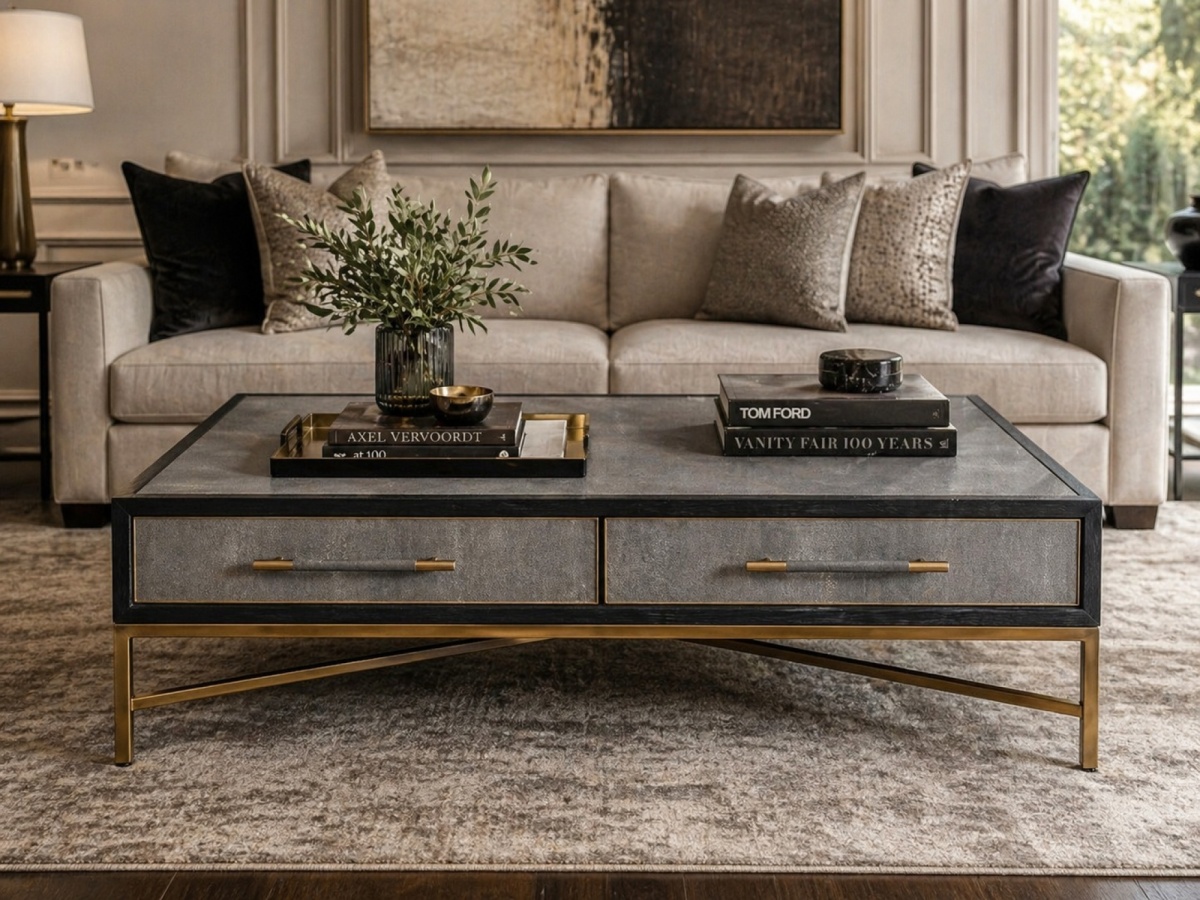
Metal, steel, aluminium or iron give coffee tables a stronger, more architectural look. Gold or brass finishes can add a luxurious note, while black metal works beautifully in industrial and modern interiors. The combination of metal with glass, stone or wood creates an effective balance between lightness, strength and decorative impact.
A Coffee Table as Part of the Interior Composition
A good coffee table should not look like an isolated object. It should belong to the wider composition of the room. It can echo the colour of the sofa, the texture of the rug, the style of the lighting, the finish of cabinet handles or the tone of decorative accessories. In an elegant living room, the table might pick up metallic details such as brass lighting, gold legs on an armchair or a decorative mirror frame. In a modern interior, it may contrast with a soft sofa and a simple rug, giving the whole space more structure and character.
Height is also important. A coffee table should usually be similar in height to the seat of the sofa, or slightly lower. This makes it comfortable to use and keeps the proportions of the seating area visually balanced. Distance matters too. The table should be close enough to reach comfortably from the sofa, but not so close that it makes it difficult to stand up or move around the room.
Luxury Does Not Have to Mean Excess
When it comes to coffee tables, luxury should not be understood only as decoration or shine. True elegance comes from good proportions, quality materials, careful workmanship and practical design. A table can be minimalist and still look luxurious if it is well made and finished beautifully. It can also be decorative, provided it remains balanced and coherent with the rest of the interior.
The best coffee tables do not feel outdated after one season. A well-chosen model can serve for many years, even if the accessories, wall colour or decorative details in the room change over time. This is why a coffee table should be seen not just as another piece of furniture, but as an investment in the comfort and visual quality of everyday living.
K&B London: Curated Furniture for Elegant Interiors
K&B London is a British company offering a carefully selected range of furniture, lighting, accessories and interior décor for stylish homes. Within its coffee table collection, the brand presents a wide choice of designs suitable for both modern and classic interiors, including tables made from materials such as marble, natural stone, glass, metal, wood and decorative finishes.
The range includes round, rectangular and square coffee tables, as well as sets of tables and more sculptural designs intended to act as statement pieces in the living room. This variety allows customers to choose a table not only by appearance, but also by function, proportion and interior style. For clients looking to create a refined and cohesive space, K&B London offers options that can help complete the room with a strong sense of elegance and detail.
What matters today is not only the product itself, but the entire buying experience. Customers are looking for a considered selection, reliable quality, convenient delivery and furniture that feels suitable for their home rather than generic. A coffee table is no longer just an anonymous accessory — it is part of a carefully designed living space.
Matching a Coffee Table to the Style of the Interior
In a glamour-style living room, coffee tables with marble tops, glass, polished metal, gold or silver finishes can work particularly well. These models bring elegance and visual impact, especially when paired with velvet sofas, decorative lighting and large mirrors.
In modern classic interiors, it is often better to choose a table with a calmer shape but excellent materials. Marble, dark wood, antique brass or polished steel can all look sophisticated, provided they do not compete too strongly with the rest of the room.
Loft and industrial interiors suit coffee tables made from black metal, glass, raw wood or concrete-effect materials. Here, the design can be stronger and more structural. The table may look heavier, but it should still remain proportionate and practical.
Scandinavian and Japandi interiors call for simplicity, natural materials and visual calm. Wooden, oval, round or clean-lined coffee tables are usually the strongest choice. In these interiors, the table does not need to dominate. Its role is to support a sense of harmony, order and warmth.
In eclectic interiors, there is more room for contrast. A stone table can sit beautifully beside a soft fabric sofa, a metal base can work against a natural rug, and dark wood can stand out against pale walls. The key is intention. Contrast should look deliberate, not accidental.
Details That Reveal Quality
When choosing a coffee table, it is worth looking closely at the details. Stability, the way the tabletop is joined to the base, the finish of the edges, the resistance of the surface, the thickness of the material and the precision of the workmanship all influence how well the table will perform over time. A product photograph may show the style, but the details show the quality.
The weight of the table is also worth considering. Very light tables may be easy to move, but they do not always provide the desired level of stability. Heavy stone or metal tables can look substantial and luxurious, but delivery, placement and future repositioning should be taken into account.
Care and maintenance are equally important. Natural stone, glass, metal and wood each require different cleaning methods. Before purchasing, it is sensible to know whether the surface needs coasters, gentle cleaning products, protection from heat or regular maintenance. These are not minor details. They determine whether the piece will continue to look good after years of everyday use.
A Coffee Table as an Investment in Everyday Living
The best interiors are not only beautiful. They are comfortable, logical and suited to the people who live in them. A coffee table demonstrates this principle perfectly. It may seem like a relatively small piece of furniture, but it influences how the living room is used every day: where we place objects, how we entertain guests, how we relax, and how the seating area functions as a whole.
That is why choosing a coffee table should be a considered decision. It is not only about colour or a fashionable material. It is about proportion, function, quality, durability and the way the table works within the room. A well-chosen coffee table can give the living room rhythm, elegance and a sense of completion that may otherwise be missing, even when the sofa, lighting and accessories are beautiful.
A coffee table does not need to be the largest or most expensive piece in the room. It needs to be the right one. It should suit the interior, support daily life and enhance the character of the home. When chosen well, it becomes much more than a practical surface. It becomes the centre of the living room, a key design detail and a piece that quietly shapes the atmosphere of the entire space.