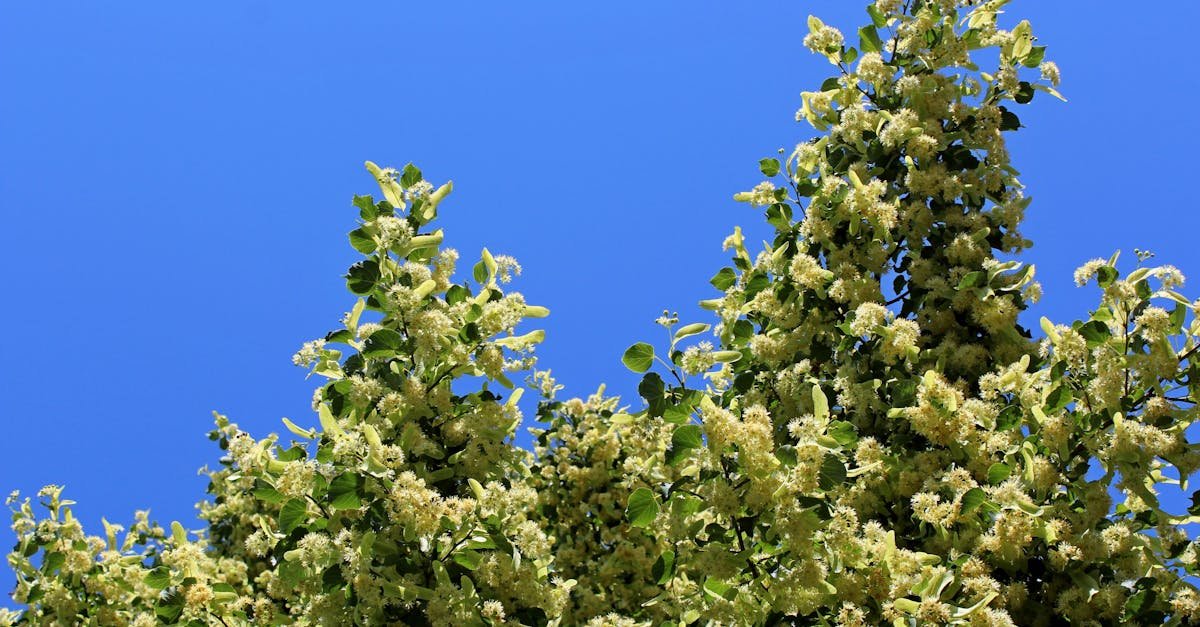
Nothing frames a home quite like a stately tree-lined alley. When those trees are small‑leaved lindens (Tilia cordata), you get a signature blend of elegance, fragrance, and resilience—plus a canopy that matures into a calming green tunnel over time. If you want to know how to choose small‑leaved linden trees for a home alley, this in‑depth guide takes you from design vision to cultivar selection, site prep, planting, and long‑term care. You’ll learn what makes this species special, which cultivars deliver uniform shape for clean lines, how to space and plant for success, and how to keep your alley thriving for decades.
Why Small‑Leaved Linden for a Home Alley?
Tilia cordata—commonly called small‑leaved or littleleaf linden—has been a favored street and alley tree across Europe for centuries. Its alluring, heart‑shaped leaves, tidy form, and fragrant early‑summer flowers make it a natural choice for residential allees. More importantly, it offers a combination of traits that translate to real‑world performance in front yards, along drives, and flanking garden paths.
- Elegant form: Naturally uniform, with a strong central leader in many cultivars. Perfect for symmetrical alleys that demand visual rhythm.
- Manageable size: Many selections mature at 40–60 ft (12–18 m) tall with a 20–35 ft (6–11 m) spread, providing shade without overwhelming most residential lots.
- Urban tolerance: Better than average resistance to pollution and compacted soils; fair drought tolerance once established.
- Fragrance and pollinators: Nectar‑rich blossoms support bees and other beneficials; the honeyed scent elevates summer evenings.
- Seasonal interest: Glossy foliage, pale flowers, and golden fall color. Some cultivars display particularly neat winter silhouettes.
With the right selection and placement, small‑leaved lindens deliver both architectural structure and living softness—two qualities every memorable alley needs.
Design First: Style, Scale, and Sense of Place
Formal vs. Informal Allee
Before you pick cultivars, clarify the visual language of your landscape:
- Formal alley: Straight runs, equal spacing, paired trees mirroring each other, and consistent height and canopy. Choose strongly upright or oval cultivars for crisp lines.
- Informal alley: Slightly staggered spacing and gentle curves soften the approach. Choose cultivars with broader crowns and subtle variation for a naturalistic look.
Single Species vs. Mixed Palette
Many classic allees use one clone for absolute uniformity. That’s ideal for a short approach or when replicating a traditional European look. However, biodiversity matters for resilience:
- Single cultivar: Maximum uniformity; easiest to maintain a consistent canopy height and width.
- Multiple linden cultivars: Visual continuity with a hedge against pest/disease risks.
- Companion species: Intermix compatible trees (similar size and form) to increase ecological diversity while preserving symmetry.
Scale and Proportion
Match mature tree size to the length and width of your corridor:
- Short drive (40–80 ft / 12–24 m): Use 4–6 trees with 15–22 ft (4.5–6.5 m) spacing; columnar cultivars excel here.
- Medium approach (80–150 ft / 24–46 m): 6–10+ trees at 20–28 ft (6–8.5 m) spacing; select uniform ovals for classic rhythm.
- Long lane (150 ft+ / 46 m+): Standard oval crowns at 25–32 ft (7.5–9.75 m) spacing; consider a double‑row for grandeur.
Remember: spacing determines the eventual canopy “tunnel.” Closer planting yields a quicker, denser overhead closure but increases pruning needs later.
Site and Climate Check
Sun, Soil, and Drainage
- Sun: Full sun (6+ hours) to light shade. Best performance and bloom in full sun.
- Soil: Moist, well‑drained loam is ideal. Tolerates a range from slightly acidic to moderately alkaline (approx. pH 6.0–7.8).
- Drainage: Avoid poorly drained sites; standing water stresses roots and invites pathogens.
- Compaction: If along a driveway or path, loosen soil and incorporate structural soils or soil cells where heavy loads occur.
Climate and Heat Tolerance
Small‑leaved linden generally thrives in USDA Zones 3–7 (some cultivars to 8 with care). Consider:
- Cold climates (Zones 3–4): Choose hardier selections and protect from desiccating winter winds.
- Warm climates (Zones 7–8): Provide deep soil volumes, consistent moisture, and afternoon shade if possible; heat stress can increase pest pressure.
Urban Stresses and Salt
- De‑icing salt: Linden tolerates soil salinity poorly. Use salt‑free de‑icers near alleys or buffer with planting strips.
- Air pollution: Relatively tolerant; proper watering and mulch mitigate stress.
Overhead and Underground Utilities
- Overhead wires: Small‑leaved linden matures tall; avoid planting directly under lines.
- Sight lines and setbacks: Maintain clear visibility at drive entrances; comply with local codes for rights‑of‑way and easements.
- Underground: Call utility‑marking services before digging; plan root barriers where needed.
Cultivars: Choosing the Right Form and Performance
Here’s where your alley’s final look is largely decided. The following proven Tilia cordata cultivars (and a closely related hybrid for cold regions) cover a range of forms, sizes, and tolerances.
Tilia cordata ‘Greenspire’
- Form: Uniform pyramidal to oval; strong central leader.
- Size: 45–55 ft tall; 25–30 ft spread (13.5–16.5 m x 7.5–9 m).
- Why choose: Classic street tree; excellent for formal allees requiring consistent silhouettes.
- Notes: Moderately tolerant of urban conditions; reliable golden fall color.
Tilia cordata ‘Rancho’
- Form: Narrow, upright‑oval; dense branching.
- Size: 40–50 ft tall; 18–25 ft spread (12–15 m x 5.5–7.5 m).
- Why choose: Great where space is tight or when a pronounced vertical emphasis is desired.
- Notes: Good choice for single‑row allees along narrower drives.
Tilia cordata ‘Erecta’
- Form: Columnar to narrowly ovate; very upright.
- Size: 45–60 ft tall; 15–20 ft spread (14–18 m x 4.5–6 m).
- Why choose: Tightest canopy profile for formal allees with limited lateral room.
- Notes: Excellent for achieving fast canopy closure overhead with closer spacing.
Tilia cordata ‘Chancole’ (Chancellor)
- Form: Oval to pyramidal; symmetrical crown.
- Size: 45–55 ft tall; 22–30 ft spread.
- Why choose: Clean structure; dependable for classic allees.
- Notes: Slightly faster growth than average; good leaf quality.
Tilia cordata ‘Glenleven’
- Form: Upright‑oval; slightly more open canopy than ‘Greenspire’.
- Size: 50–60 ft tall; 25–35 ft spread.
- Why choose: Graceful outline for allees seeking a softer, airy look.
- Notes: Good vigor; handles a range of urban sites.
Tilia cordata ‘Corzam’ (Corinthian)
- Form: Narrow pyramidal; tidy, uniform habit.
- Size: 40–50 ft tall; 15–25 ft spread.
- Why choose: Excellent where a moderate height with restrained spread is ideal.
- Notes: Particularly suitable for smaller residential allees.
Hybrid Option for Cold Regions: Tilia x ‘Harvest Gold’
- Form: Oval; sturdy branching.
- Size: 40–50 ft tall; 25–30 ft spread.
- Why choose: Exceptional cold hardiness and good urban adaptability; useful in Zone 2/3 climates where winters are severe.
- Notes: Complements small‑leaved linden allees in harsher climates while maintaining a similar aesthetic.
Tip: Walk or drive past mature plantings of your shortlisted cultivars in local neighborhoods. Real‑world observation of crown shape, leaf density, and street performance beats catalog photos.
Quality Matters: How to Source the Best Trees
Stock Type: Bare‑Root vs. Container vs. B&B
- Bare‑root (dormant season): Lightweight, economical, excellent root‑to‑soil contact on planting; limited planting window.
- Container‑grown: Year‑round availability; inspect for circling roots and de‑pot to correct defects.
- Balled and burlapped (B&B): Heavier, often used for larger caliper trees; maintain root ball integrity, remove wire/burlap at planting.
Specifications to Request
- Caliper: 1.5–2.5 in (3.8–6.4 cm) is ideal for allees; balances establishment speed and cost.
- Leader: One strong, central leader; avoid forks below 8–10 ft (2.4–3 m).
- Crown: Symmetrical scaffolds, evenly spaced; no severe pruning wounds.
- Roots: Visible root flare; no girdling or pot‑bound roots; healthy, fibrous feeder roots.
- Health: Pest‑free foliage; no trunk cracks or cankers.
Guarantees and Provenance
- Nursery warranty: 1‑year replacement is common; verify terms.
- Local adaptation: Regionally grown stock often establishes faster.
- Uniformity: For allees, purchase from the same production batch when possible for matched size and habit.
Layout and Spacing for a Picture‑Perfect Alley
Single‑Row Spacing
- Columnar forms (e.g., ‘Erecta’, ‘Rancho’): 15–22 ft (4.5–6.5 m) apart.
- Oval forms (e.g., ‘Greenspire’, ‘Glenleven’): 20–28 ft (6–8.5 m) apart.
Closer spacing accelerates canopy connection but requires more pruning for clearance as trees mature.
Double‑Row (Paired) Allee
- Across the lane: Separate the two rows by 12–20 ft (3.5–6 m) depending on vehicle width and expected canopy spread.
- Within each row: Use the single‑row spacing guidelines above.
- Staggering: For informal effects, offset trees by half the within‑row spacing.
Setbacks and Clearances
- From pavement edge: 3–6 ft (0.9–1.8 m) minimum to reduce sidewalk lifting and provide root space.
- From buildings/fences: 12–15 ft (3.5–4.5 m) for oval crowns; 8–10 ft (2.4–3 m) for columnar forms.
- Drive sight lines: Keep first trees back from street intersections per local code.
Root Management and Soil Volume
- Root barriers: Install linear barriers 18–24 in (45–60 cm) deep along sidewalks to deflect roots downward.
- Soil volume: Target 600–1,000 cu ft (17–28 m³) of good soil per tree for long‑term vigor; use structural soils or soil cells along paved alleys.
Planting: Do It Right, Once
Step‑by‑Step
- Mark utilities: Call before you dig.
- Layout: Stake exact tree centers to confirm symmetry.
- Dig wide, not deep: Planting hole 2–3× root ball width; depth so the root flare sits at or just above grade.
- Prepare roots: Prune circling roots; for B&B, remove at least the top 1/3 of wire basket and all twine/burlap from the flare.
- Set and orient: Face best side toward the approach; ensure vertical alignment.
- Backfill with native soil: Firm gently in lifts; avoid heavy amendments that create perched water tables.
- Water in: Apply 10–15 gallons (38–57 L) immediately to settle soil and eliminate air pockets.
- Mulch: 2–3 in (5–8 cm) layer, donut‑shaped, keeping mulch off the trunk.
- Stake if needed: Only on windy/exposed sites; remove after 1 year.
Watering Schedule (Years 0–2)
- Spring–Fall: 10–15 gallons per tree weekly if rainfall < 1 in (25 mm); double during heat waves.
- Winter (mild climates): Water monthly during dry spells when soil isn’t frozen.
- Check soil: Aim for evenly moist, not saturated. Use a soil probe or trowel.
Fertilization
- At planting: Skip high‑nitrogen fertilizers; focus on root establishment.
- Year 2+: If a soil test indicates deficiency, apply a balanced, slow‑release fertilizer in early spring.
Training and Pruning: Building the Allee Architecture
Structural Training (Years 1–5)
- Central leader: Maintain one dominant leader; remove competitors.
- Scaffold spacing: Select well‑spaced lateral branches spiraling around the trunk.
- Raise canopy gradually: Remove lower branches in stages to achieve desired clearance (8–10 ft / 2.4–3 m for pedestrian/vehicle areas).
Uniformity and Clearance
- Match cuts across the row: Prune paired trees to similar heights and structures to maintain rhythm.
- Timing: Late winter or very early spring while dormant; avoid heavy summer pruning.
What Not to Do
- No topping: It ruins structure and invites decay.
- No lion‑tailing: Don’t remove too many inner branches; it destabilizes crowns.
Care: Water, Mulch, and Underplanting
Watering Long‑Term
- Years 3–5: Deep water during extended droughts (every 2–3 weeks).
- Mature trees: Occasional deep watering in prolonged dry periods preserves leaf quality and reduces stress.
Mulch Management
- Maintain 2–3 in (5–8 cm): Refresh annually to suppress weeds and moderate soil temps.
- Keep clear of trunk: Avoid mulch volcanoes to prevent rot and pests.
Underplanting
Consider groundcovers or low perennials tolerant of light shade once canopies knit:
- Options: Epimedium, Pachysandra, Hakonechloa, Carex, ferns, hellebores.
- Design tip: A continuous living carpet visually links tree bases and simplifies maintenance.
Pests, Honeydew, and Other Realities
Aphids and Honeydew
Aphids commonly feed on lindens and excrete sticky honeydew that can coat cars and pavement, encouraging sooty mold. Management:
- Right placement: Don’t plant directly over parking areas or patios if aphid mess will bother you.
- Biological control: Encourage lady beetles, lacewings, and hoverflies by planting diverse, nectar‑rich perennials nearby.
- Water and vigor: Healthy, well‑watered trees tolerate aphids better.
- Targeted sprays: Use horticultural oils or insecticidal soaps when needed; avoid broad‑spectrum or systemic insecticides harmful to pollinators.
Japanese Beetle and Leaf Chewers
- Monitoring: Inspect foliage mid‑summer; hand‑pick small populations.
- IPM: Traps can attract more beetles than they capture; place far from the alley if used.
Leaf Spots, Mildews, and Mites
- Prevention: Good air movement and proper spacing reduce foliar diseases.
- Mites: More common in hot, dry conditions; rinse foliage occasionally during droughts to dislodge.
Salt Injury and Winter Stress
- Buffer: Plant away from salted roads/driveways; use salt‑safe de‑icers.
- Mulch and water: Reduce winter desiccation by maintaining soil moisture into late fall.
Bottom line: Most issues are manageable with right‑plant/right‑place decisions and basic cultural care—key considerations when deciding how to choose small‑leaved linden trees for a home alley.
Wildlife, People, and the LInden Bloom
Pollinator Magnet—With Nuance
Small‑leaved lindens are celebrated for supporting bees and other pollinators. Research suggests the trees themselves aren’t inherently toxic; problems reported in rare cases are typically linked to late‑season nectar scarcity and broader foraging stressors. Plant a diverse bloom calendar in your garden to support pollinators before, during, and after linden flowering.
Fragrance and Human Comfort
- Bloom time: Early to mid‑summer; fragrance is sweet but not overpowering outdoors.
- Allergies: Pollen is insect‑carried, not wind‑borne; generally low allergenic impact for most people.
Safety and Cleanliness
- Underfoot: Keep mulch and underplanting tidy near walks and drives.
- Honeydew: If aphids are an aesthetic concern, position trees so drips don’t fall on seating areas or frequent parking spaces.
Budgeting and Timeline
Cost Factors
- Tree price: Increases with caliper; expect higher delivery and planting costs for B&B stock.
- Site prep: Soil improvement, barriers, and irrigation add up but pay dividends in longevity.
- Maintenance: Annual pruning (light) for uniformity; periodic deep watering during droughts.
Phased Planting
- Two‑stage approach: Plant every other tree in Year 1, then infill in Year 2 to spread costs while preserving uniformity.
- Consistent sourcing: Reserve the second batch with the same nursery/batch to match size and habit.
Five‑Year Alley Timeline
- Year 0: Design, site prep, select cultivars, and place orders.
- Year 1: Plant; establish watering routine; begin structural training.
- Year 2–3: Continue training; moderate growth; early canopy alignment visible.
- Year 4–5: Canopies start to knit; raise clearance; visual rhythm maturing.
Common Mistakes to Avoid
- Planting too deep: Buried root flares suffocate roots and invite decay.
- Over‑tight spacing: Leads to crowding, heavier pruning, and conflicts with structures.
- Uniformity blind spots: Mixing different sizes or non‑matching clones breaks the alley’s rhythm.
- Ignoring salt and utilities: Both can undermine long‑term success.
- Premature heavy pruning: Let young trees build energy; make small, smart structural cuts.
Quick Checklist: How to Choose Small‑Leaved Linden Trees for a Home Alley
- Define style: Formal or informal? Single or double row?
- Confirm site: Full sun, well‑drained soil, enough lateral and vertical space.
- Select form: Columnar (e.g., ‘Erecta’, ‘Rancho’) for tight spaces; oval (‘Greenspire’, ‘Glenleven’) for classic canopies.
- Verify hardiness: Match cultivar to your USDA zone; consider cold‑hardy hybrids in severe climates.
- Plan spacing: 15–22 ft for columnar; 20–28 ft for oval forms; adequate setbacks.
- Source quality stock: Central leader, visible root flare, no girdling roots, uniform size across the order.
- Prepare soil: Provide generous soil volume; add root barriers near pavement.
- Plant correctly: Root flare at/above grade; remove wire/burlap; mulch properly.
- Establish care: Weekly deep watering in years 0–2; begin structural pruning late winter.
- Manage pests smartly: Place away from parking; favor IPM over broad‑spectrum chemicals.
FAQs
How many trees do I need for a short residential alley?
For a 60–80 ft (18–24 m) drive, plan on 4–6 trees total (2–3 per side) using 18–22 ft (5.5–6.5 m) spacing for columnar forms or 20–25 ft (6–7.5 m) for oval forms.
When is the best time to plant?
Plant in early spring or fall when temperatures are mild and rainfall is reliable. Bare‑root trees must be planted while dormant.
Can I plant small‑leaved lindens under overhead power lines?
Generally no. Their mature height conflicts with lines. Choose a lower‑growing species for under‑wire locations and use lindens where vertical clearance is adequate.
Will linden roots lift my driveway or walk?
Any tree can displace paving in compacted, oxygen‑poor soils. Mitigate with proper setbacks, root barriers, generous soil volume, and avoiding severe compaction during construction.
Are small‑leaved lindens messy?
They are relatively tidy, though aphid honeydew can drip in mid‑summer. Strategic placement and fostering natural predators usually keep it manageable.
Do lindens need a lot of pruning?
No. Focus on light, regular structural pruning in the first 5–7 years to set the architecture, then occasional maintenance to preserve clearance and symmetry.
Putting It All Together
Creating a picture‑perfect alley is equal parts art and horticulture. Start with design intent, then match cultivar form to your corridor’s scale. Validate your site’s sun, soil, and climate. Source uniform, high‑quality stock with visible root flares and strong leaders. Space thoughtfully to balance early canopy closure with mature clearance. Plant with care, water deeply through establishment, and guide structure with light, timely pruning.
That’s the essence of how to choose small‑leaved linden trees for a home alley: right cultivar, right place, right care. Do those three things, and in just a few seasons you’ll watch your saplings form a living gallery—one that leads guests, day after day, into the cool embrace of shade and home.
Final Pro Tips
- See before you buy: Visit nurseries and tag your trees—uniformity is crucial for allees.
- Irrigate smartly: A simple drip line along the row makes establishment nearly foolproof.
- Think decades: Soil volume and spacing decisions you make today determine health and beauty for the next 50 years.
From sapling to shade isn’t just a poetic arc—it’s a plan. With thoughtful selection and steady care, small‑leaved lindens will repay you with structure, fragrance, and a timeless, shaded approach that elevates your home’s character for generations.