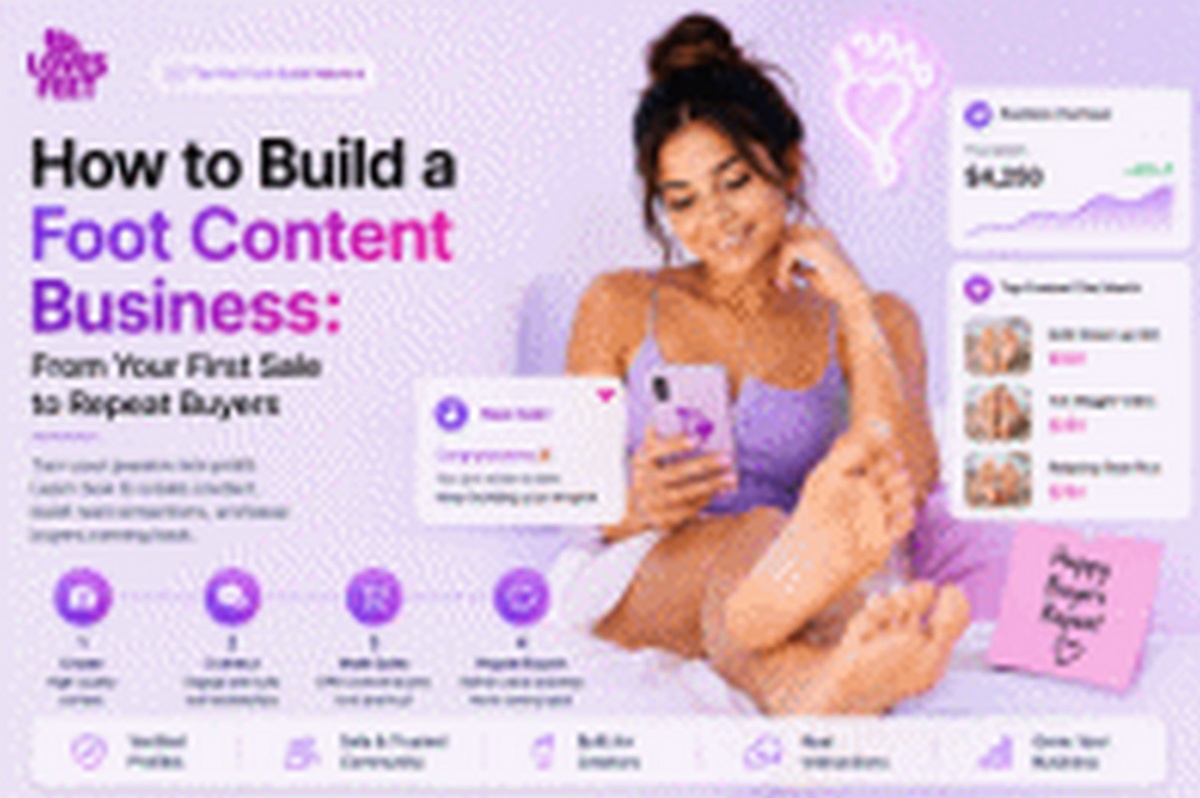
But a first sale is just the beginning.
The real challenge is figuring out how to turn occasional purchases into something more consistent. That means creating content regularly, building relationships with buyers, staying organized, and understanding what your audience actually wants.
If you're learning how to sell foot content, the focus shouldn't stop at getting your first customer. The bigger opportunity is building a system that encourages people to follow your work, come back for new content, and become repeat buyers.
For creators using platforms such as LovesFeet, this can mean thinking beyond individual transactions and treating content creation as a small business.
What Changes After Your First Sale?
Before your first sale, most of your attention is probably focused on getting noticed.
You want people to discover your profile, look at your content, and decide whether they want to buy.
After that first purchase, your priorities begin to change.
Now you have something valuable that you didn't have before: real customer feedback.
You can start asking questions such as:
-
What type of content attracted the buyer?
-
How did they discover your profile?
-
What did they ask for?
-
What made them decide to purchase?
-
Would they be interested in similar content?
You don't need to have all the answers after one sale. But every transaction gives you information that can help you make better decisions.
Your first sale shouldn't just be viewed as income. It should be viewed as your first piece of business data.
Build a Clear Creator Brand
If you want to sell feet pics online consistently, your profile needs to communicate what makes your content worth following.
Think of your creator profile as your storefront.
Someone discovering you for the first time should be able to understand your style, personality, and the type of content you create without having to search through dozens of posts.
That doesn't mean you need a complicated personal brand.
A recognizable style, consistent presentation, and clear profile can be enough to make your content easier to remember.
LovesFeet's creator experience is built around verified profiles and helping Divas create content, post regularly, and grow their following. That makes your profile an important part of the overall customer journey.
Someone may discover one post, visit your profile, and then decide whether they want to follow you or explore more of your content.
That first impression matters.
Create a Content Routine You Can Actually Maintain
Consistency is one of the biggest differences between casual content creation and a real foot content business.
You don't necessarily need to post every day.
In fact, setting an unrealistic schedule can quickly lead to burnout. A better approach is to choose a routine that fits your time and stick to it.
For example, posting three times a week gives you roughly 12 posts per month and more than 150 posts over a year.
That's a significant content library without requiring you to create something every single day.
You can also plan content in batches.
Instead of preparing one piece of content every time you want to post, dedicate a few hours to creating several pieces at once. This makes it easier to maintain your schedule when you're busy.
The goal isn't simply to produce more.
It's to create enough quality content to give your audience a reason to keep checking your profile.
Don't Make Every Post a Sales Pitch
One common mistake creators make after getting their first sale is becoming too focused on selling.
If every post is essentially an advertisement, your profile can start feeling more like a storefront than a creator page.
People may have discovered you because they liked your content. Give them reasons to continue following you even when they're not buying.
Share different types of content that fit your creator style. Keep your profile active. Show personality where appropriate. Give your audience something interesting to look forward to.
Sales should be part of your content strategy, not the entire strategy.
A healthy content cycle can look something like:
Create → Publish → Engage → Build interest → Offer content → Follow up → Create again
This makes selling feel like a natural part of the relationship rather than the only reason you're communicating.
Turn Your First Buyer Into a Relationship
Getting a new buyer is exciting, but repeat buyers can be even more valuable.
Why?
Because they already know your content and have already decided that they like what you offer.
That means you don't have to start from zero every time.
This is where communication becomes important.
If someone messages you, respond professionally. If they have questions about your content, make the information clear. If they have preferences that are relevant to future interactions, keep them in mind when appropriate.
You don't need to force a sale every time someone contacts you.
A good customer experience can be more valuable in the long run than a quick transaction.
The objective is to make someone think:
"I enjoyed this creator's content. I'll check back again."
Give Repeat Buyers a Reason to Come Back
Repeat purchases rarely happen by accident.
People need a reason to return.
One of the simplest ways to create that reason is to keep producing new content.
If your profile looks exactly the same three months after someone's first purchase, there may not be much motivation for them to return.
On the other hand, regular new content creates anticipation.
You can also experiment with different themes, formats, or content ideas and see what your audience responds to.
You don't have to completely change your style every week.
Small variations can be enough to keep your content fresh while maintaining a recognizable identity.
Learn From What Your Audience Responds To
Once you have several posts and sales behind you, patterns will start appearing.
Some content may receive more views. Certain posts may generate more messages. Particular styles may lead to more purchases.
Pay attention to those patterns.
For example, imagine you create 20 pieces of content and notice that content around one particular theme consistently performs better than the rest.
That doesn't mean you should create only that content.
It does mean you've found something worth exploring further.
Your audience is effectively telling you what interests them.
The smartest creators listen.
Keep Your Content and Sales Organized
Organization becomes increasingly important as your content library grows.
When you have 10 pieces of content, remembering what you've created is easy.
When you have 50, 100, or 150+ pieces, it becomes much harder.
A simple spreadsheet or content tracker can help.
Keep track of when content was created, what type it is, whether it has been published, and how it performed. You can also record basic sales information so you can identify which content generates the most interest.
You don't need a complicated business management system.
Even a simple tracking process can prevent duplicate work and help you plan future content more effectively.
Set Realistic Business Goals
If your only goal is "make more money," it can be difficult to know whether you're actually making progress.
Instead, break the goal into smaller targets.
You might aim to:
Publish consistently for 30 days.
Create 12 new pieces of content in a month.
Increase your follower count.
Get your first repeat buyer.
Improve your profile presentation.
These goals are easier to measure and give you something specific to work toward.
Once you have several months of information, you can begin setting more meaningful financial targets based on your actual performance rather than guessing.
Focus on Retention, Not Just New Customers
Finding new customers will always be part of growing a creator business.
But constantly starting from zero can be exhausting.
That's why customer retention matters.
If you have 20 buyers and five of them purchase from you again, you've already created a valuable foundation.
Now imagine gradually increasing that number.
The goal isn't necessarily to have thousands of customers immediately. A smaller group of genuinely interested buyers who return regularly can be much more useful than a large audience that never purchases.
This is why building relationships should be treated as part of your business strategy.
Use Discovery to Grow Beyond Your Existing Audience
Relationships with existing buyers are important, but you also need new people to discover your content.
LovesFeet's For You experience allows visitors to browse creator content, giving creators an opportunity to make an impression before someone even decides to sign up.
That means every piece of public content can potentially become an introduction to your profile.
The journey can be simple:
Discover your content → Visit your profile → Follow → Engage → Purchase → Return
Not everyone will move through every stage, and that's completely normal.
Your job is to make each stage strong enough that interested people have a reason to continue.
Avoid These Common Mistakes
Building a foot content business doesn't mean trying to maximize every opportunity.
One mistake is posting inconsistently and expecting steady sales.
Another is focusing so heavily on new customers that existing buyers are forgotten.
Creators can also make things unnecessarily complicated by trying to create too much content, accepting every request, or setting goals that aren't realistic.
The better approach is to build a system you can maintain.
Create consistently. Communicate professionally. Keep your content organized. Pay attention to what works. Most importantly, maintain clear personal and business boundaries.
Sustainability matters just as much as growth.
From One Sale to a Sustainable Content Business
Your first sale is proof that someone sees value in your content.
Your next goal should be understanding why they bought and how you can create that same value for other people.
If you're learning how to sell foot content, don't think only about making the next sale. Think about building an audience, creating a recognizable profile, maintaining consistent content, and providing a customer experience that encourages people to return.
If you're trying to sell feet pics online more consistently, organization and relationships become just as important as content itself.
And if you're serious about building a foot content business, start treating your content like a business asset rather than something you create only when you feel like it.